

It’s Wednesday 7:20 am. Sam places his steaming cuppa tea on his desk and spots and e-mail from his 2nd biggest customer. It’s a supplier review e-mail.
The review’s due in 14 days and most of the questions take less than 10 minutes each to answer: lead times, defect rates, the pricing Sam hasn’t changed in 3 years.
Near the bottom sits a heading, “Product development”, with 3 questions underneath asking Sam:
-
what’s changed on his product in the last 24 months,
-
what new refinements or improvements are coming in the next 24 months,
-
and which products (if any) he plans to retire?
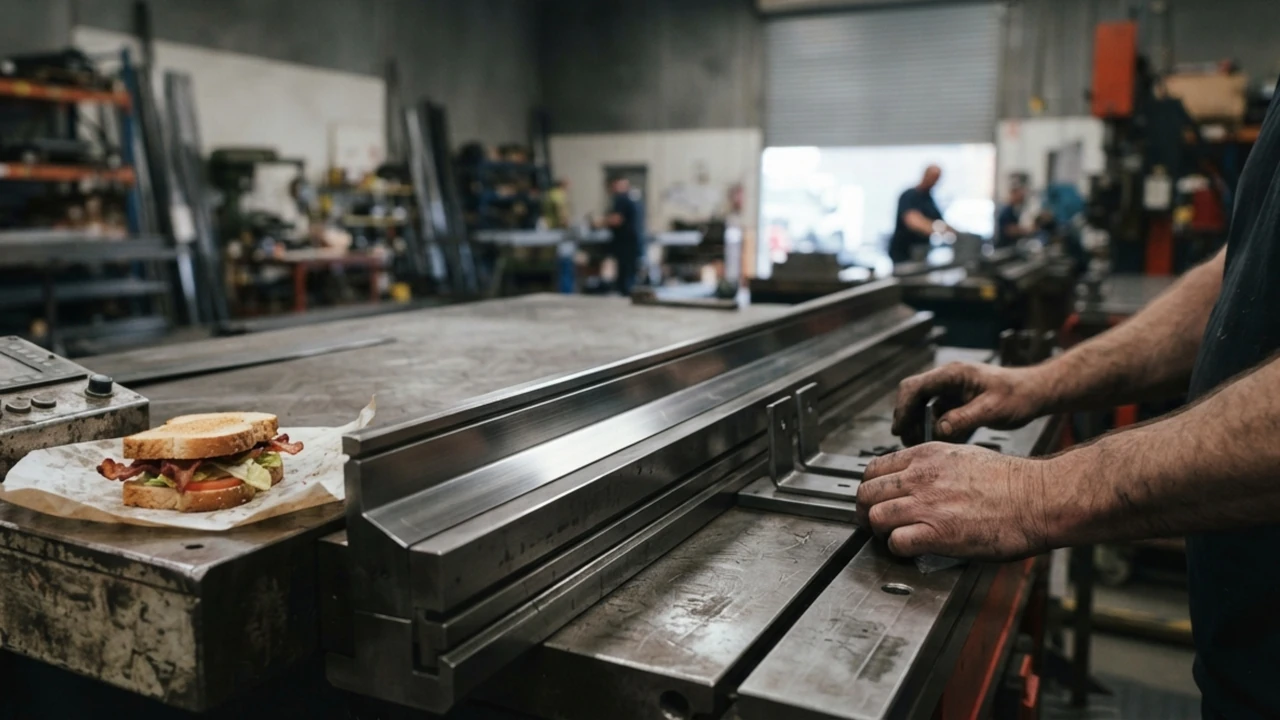
He gets hung up on the 2nd question. Sam walks out of his office onto the shop floor where the laminated drawing of his most profitable bracket is pinned above the press brake.
“Revision B. March 2022.”
Sam’s the founder and Managing Director of a light manufacturing business in Falkirk, making steel roof-mounting brackets and clamps for solar installers. 14 people, 7 years in business, and a factory off the M9.
He drew the bracket on his kitchen table in 2019 (much to his wife’s annoyance) and sold the first 200 units from his car’s boot to solar installers frustrated by a clamp that slipped on Scottish slate.
He changed the design twice after that, the 2nd time for an installer who rang him from a roof in Oban.
After the adjustments, there was no reason to keep improving the bracket.
Sam assumed what nearly everyone assumes: a bracket that works is finished, installers buy on price, on lead time, and on what’s on the shelf.
In 7 years no customer had asked Sam what was coming next, Sam stopped sketching and began running his business.
His business’ turnover in 2023 was £1.42m and in 2025, £1.43m, which Sam sees as a steady business model he can show to any bank or investor.
Sam’s customer sent him the supplier review because they had just won a housing estate outside Stirling, 170 homes over 2 years.
The housebuilders want to ensure that every part of the roof comes from suppliers who will still be in business 2 years from now.
Sam’s customer supplies solar panels for homes, an installer needs brackets, rails, and the trays that sink panels into a roof instead of sitting them on top.
They’d rather buy all 3 components from 1 supplier than from 3 suppliers in different locations. Sam only makes the brackets.
Sam goes to unlock the roller door, leaving the review open on his screen, unsure of what to do.
Sam’s customer still needs rails and trays for the 170 homes, and firms in London make all 3 parts. Sam’s customer can buy everything they need from 1 firm, in 1 order, and drop Sam.
The factory’s made the same 3 products since 2022, on the same machines, and nobody’s been hired in the past 4 years who wasn’t replacing somebody who left.
So when word gets round about the 170 homes outside Stirling, 2 of the 14 people in the factory ask Sam whether the estate being built means they’ll get more shifts, and Sam tells them he doesn’t know yet.
What Sam doesn’t tell them is that if they lose this customer, the factory will need to drop 4 workers.
A business in Sam’s position has a name, a business that trades, pays wages, files accounts on time, and hasn’t grown, improved or built anything new in 4 years is called…
… a zombie company.
Every year the bracket stays the same, the roofs change, the fixings change, and the housebuilders specify something different.
The bracket Sam sells in 2026 is the same bracket he sold in 2022, except now, it’s in a market that’s moved on… leaving him behind.
Zombie companies need zombies to run them.
Sam’s at the factory before 07:20, the machines run, the wages clear, and not an hour of Sam’s work leaves the business any more alive than the business was last year.
Sam can design a rail and a tray to add to his product line, but what Sam can’t do on his own, before the 30th of April, is find out which components his customers will buy next, and why.
The cost of not knowing isn’t losing 1 customer, it’s that every product decision from here is made on a guess and a hope.
Your Competitive Edge Blueprint™ starts where those decisions are meant to start, with the person buying from you.
The research identifies
-
what products your buyers are yearning for that you could offer them,
-
what your buyers have already been offered and either settled for, or rejected,
-
the exact words they use when describing their frustrations to a colleague in the pub,
-
and where your pricing sits against your competitors.
Your research unfolds in stages:
-
each stage tells you something you didn’t know, and shapes what the next stage expands on,
-
we do at least 80% of the work – your 20% is direction and deciding,
-
each step can be taken at whatever pace suits your availability,
-
and a full refund guarantee for any step you’re not happy with.
Once your prospect’s deeply researched, your product development stops being based on a hunch and a hope. You know the pains your buyers have before you spend and penny, and you’ll know how to optimise your price for maximum profit.
Most founders want to get on and sell, because research feels like a delay that gets in the way of selling their product.
Finding out exactly who will buy what from you isn’t a delay before selling your product. It’s the exact step you need to prevent becoming a zombie company yourself.



